
IVAN-CONDRACHE LAURENTIU
CONDRACHE – THE ALCHEMIST OF THE UNSEEN
„BETWEEN TWO BLINKS THE UNSEEN OPENS; THERE THE HUMAN BEGINS TO TRANSFORM.”
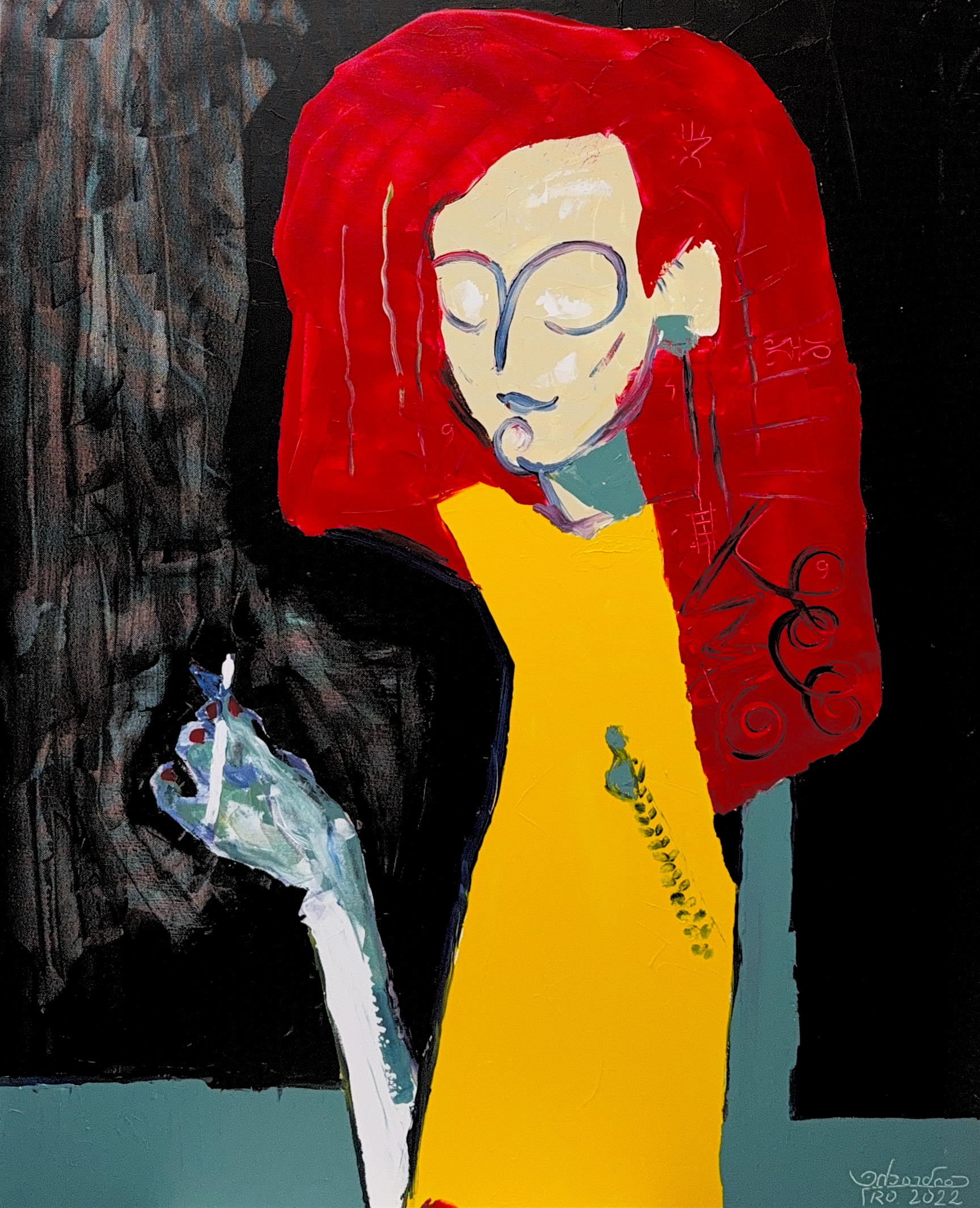
IVAN-CONDRACHE LAURENTIU
Condrache — The Alchemist of the Unseen
In a reality where time dilates and matter dissolves into energy, Condrache does not create mere paintings—he constructs symbolic thresholds, encoded fields of perception that exist beyond the limits of the visible.
Each work functions as an open portal toward a latent dimension, where light and shadow are no longer opposites, but complementary forces generating new layers of meaning. His practice operates within a space of tension—between revelation and concealment, structure and dissolution, presence and absence.
The gesture of the brush is never incidental. Every mark carries intention, forming a visual language of coded symbols that resonate beyond the surface. Gold is not used for ornament, but as a trace of primordial knowledge; deep blue is not simply color, but the depth of a silent, unarticulated reality awaiting recognition.
Approaching his work is not a passive act of observation. The viewer is drawn into a perceptual shift—beyond image, beyond composition—into a field where sensation, memory, and thought begin to reorganize. Each texture becomes a layer of an internal manuscript; each reflection distorts linear time and invites introspection.
Condrache’s paintings are not static objects. They operate as living structures—systems of transformation that activate inner thresholds within the viewer. What emerges is not a fixed meaning, but a process: an unfolding of awareness.
At the core of his practice lies a persistent inquiry into the unseen—the interval between perception and becoming. He does not paint what is visible, but what exists between gazes, in that subtle space where emotion and thought converge into an unspoken, luminous language.
His work can be understood as an alchemical process: matter transmuted into symbol, image into experience, perception into transformation. In this sense, the viewer does not simply look at a Condrache work—one enters it.
And upon leaving, something has shifted.